

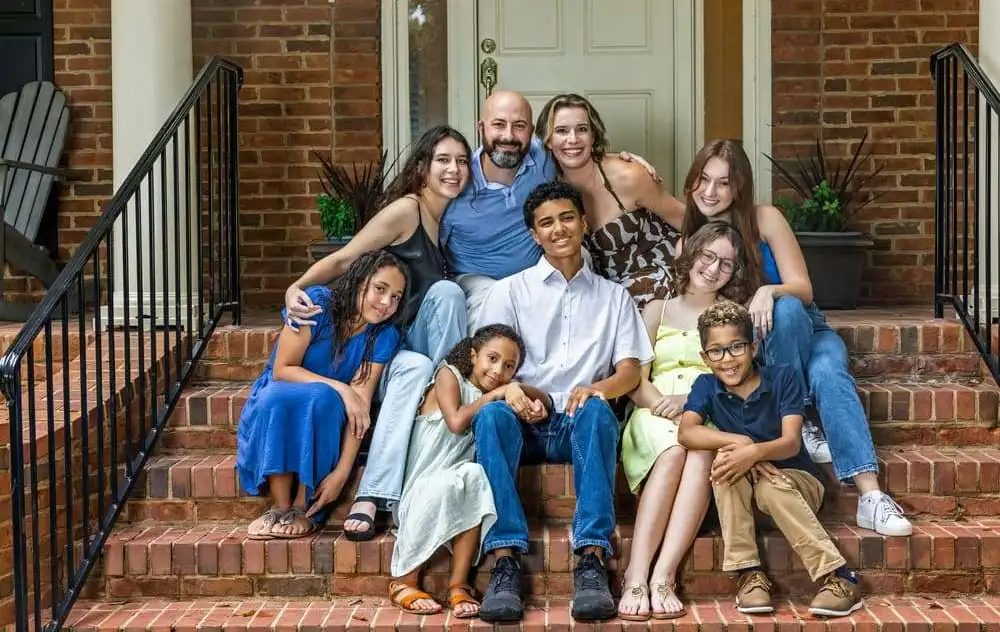
Let’s be honest: estate planning can feel like navigating a maze even in the simplest of circumstances. But for non-traditional and blended families? Well, the maze suddenly gets more complex, with extra turns and hidden doors. The standard playbook—the one written for the “traditional” nuclear family—often falls painfully short.
Here’s the deal. If you have a blended family with children from previous relationships, a long-term partner you’re not married to, or perhaps a chosen family structure, the default laws are not your friend. Without careful, intentional planning, your assets might not end up with the people you love most. And the tax bill? It could be unnecessarily harsh.
Why “Standard” Planning Fails Blended & Non-Traditional Families
Think of state intestacy laws—the rules that kick in if you die without a will—as a one-size-fits-all template. It’s a template that assumes a spouse and biological children are the only players. That creates immediate pitfalls.
For instance, an unmarried partner typically receives nothing under these laws. Zero. In a blended family, your assets could automatically go to your current spouse, unintentionally disinheriting your children from a prior relationship. It’s a common, heartbreaking scenario that plays out in courtrooms all the time.
And then there’s the tax angle. The unlimited marital deduction is a powerful tool for married couples to defer estate tax. But it’s exclusively for legal spouses. For unmarried partners or even certain family structures, that tool vanishes, making proactive inheritance tax planning not just smart, but essential.
Core Strategies to Build Your Safety Net
Okay, enough about the problems. Let’s dive into solutions. The goal is control, clarity, and tax efficiency. These strategies are your building blocks.
1. The Foundational Documents: More Than Just a Will
A will is a start, but honestly, it’s often not enough on its own. It has to go through probate, which is public and can be contested. For blended families, a revocable living trust is frequently the MVP. Why? It lets you dictate exactly how and when assets are distributed.
You can, for example, provide for a surviving spouse during their lifetime while ensuring the remaining assets ultimately pass to your children. This is often called a “QTIP” or “marital trust” structure. It provides peace of mind for everyone involved.
2. Beneficiary Designations: The Silent Drivers
Retirement accounts (IRAs, 401(k)s) and life insurance policies bypass your will or trust entirely. They go directly to the named beneficiary. This is powerful, but you have to check—and double-check—these designations regularly. An ex-spouse still listed? A child omitted? It happens more than you’d think. This is a critical, yet often overlooked, piece of estate planning for blended families.
3. Gifting as a Strategic Tool
Gifting assets during your lifetime can be a brilliant way to reduce your taxable estate. You can gift up to the annual exclusion amount ($18,000 per recipient in 2024, adjusted for inflation) to as many people as you like, tax-free. For a large, blended family, this lets you support loved ones now and shrink future tax liability. It’s proactive, and it lets you see the joy your gifts bring.
Navigating Specific Family Dynamics
Every family’s story is unique. Here’s how to think about some common, yet complex, situations.
Unmarried Couples & Domestic Partners
Without the marital deduction, the estate tax can hit hard at the first death. Life insurance held in an irrevocable life insurance trust (ILIT) can provide the liquidity to pay that tax. Titling of assets—like owning a home as joint tenants with rights of survivorship—is also crucial to ensure direct transfer.
Blended Families with Children from Prior Relationships
The central tension here is often: providing for a surviving spouse while protecting the inheritance of your children. Trusts are the answer. A well-drafted trust can balance these interests beautifully, preventing assets from being unintentionally diverted to a new spouse’s children later on.
Families with Disabled Beneficiaries or Estranged Relatives
Special needs trusts are vital to preserve a beneficiary’s eligibility for government assistance. And for estranged relatives you wish to exclude? Explicit disinheritance language in your documents, alongside a “no contest” clause, can help deter costly legal battles. It sounds harsh, but clarity is kindness in these situations—kindness to the loved ones you *are* providing for.
The Essential Conversation Starter
All this planning starts with a talk. A real, open, maybe-uncomfortable conversation with your loved ones. It’s not about morbidity; it’s about care. Explain your intentions. This transparency can prevent confusion and conflict later—a huge gift in itself.
And then, bring in the professionals. An estate planning attorney who understands non-traditional families is worth their weight in gold. Pair them with a tax advisor. It’s an investment in your family’s future harmony.
In the end, your estate plan is the final, tangible expression of your love and your values. For families that don’t fit the mold, it’s your chance to write the rules yourself—to ensure that your unique story ends exactly as you intend. That’s not just planning. That’s legacy.